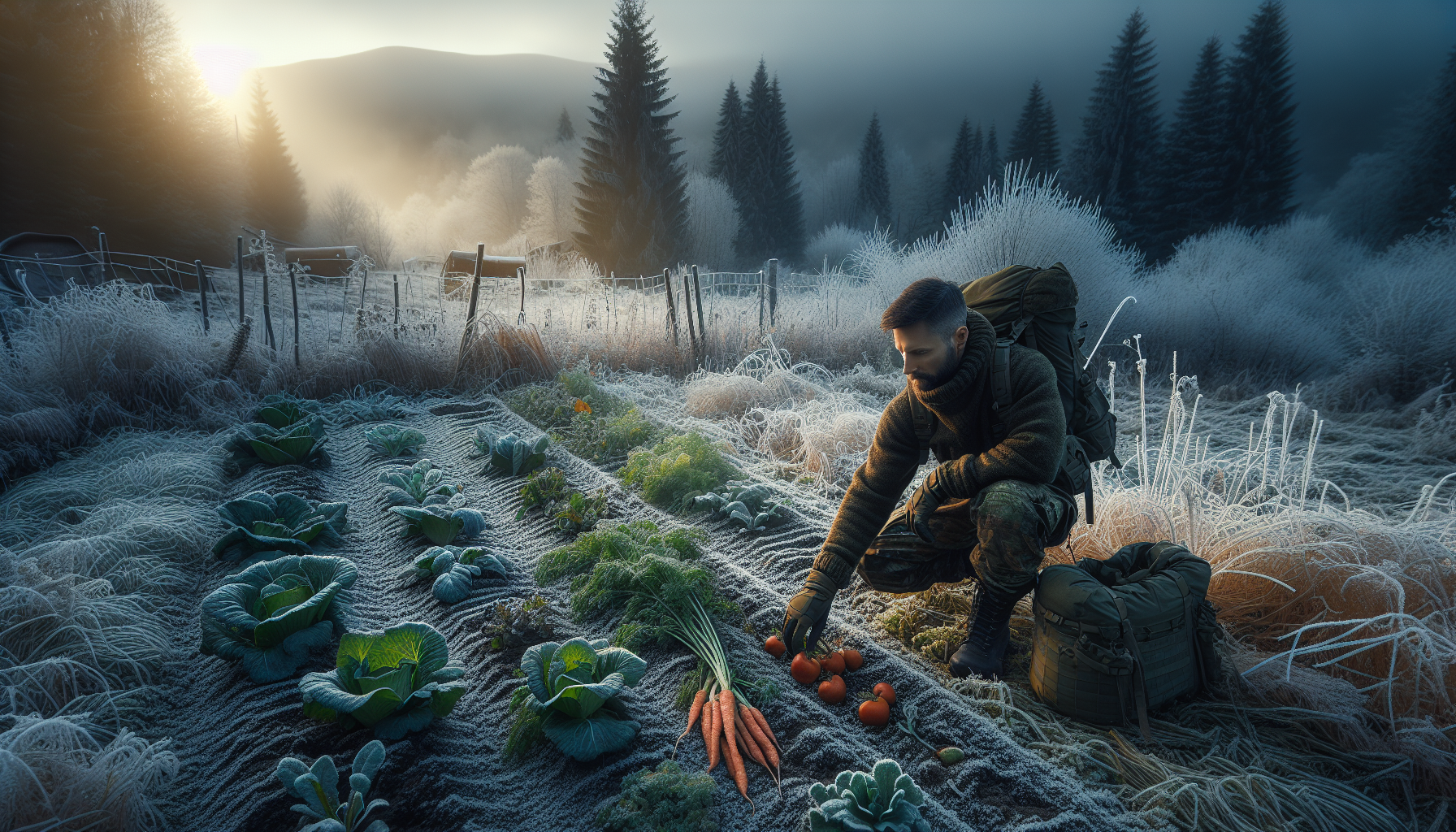
As the chill of winter approaches, the art of storing root vegetables becomes an invaluable skill for maintaining a robust pantry. Harnessing effective techniques for winter food storage not only ensures nourishment but also honors the bountiful harvest. Root vegetables are sturdy and, when stored properly, can last through the colder months, offering both flavor and nutrition at your fingertips.
Introduction to Storing Root Vegetables for Winter
Defining the realm of food storage involves understanding the specific needs and behaviors of various vegetables. Root vegetables—potatoes, carrots, beets, and others—are excellent candidates for long-term storage. These resilient crops, when stored correctly, can remain fresh and nutritious, providing a continuous source of sustenance during winter’s barren months. Let’s dive into the essential strategies for storing these vegetables effectively.
1. Choosing the Right Vegetables for Storage
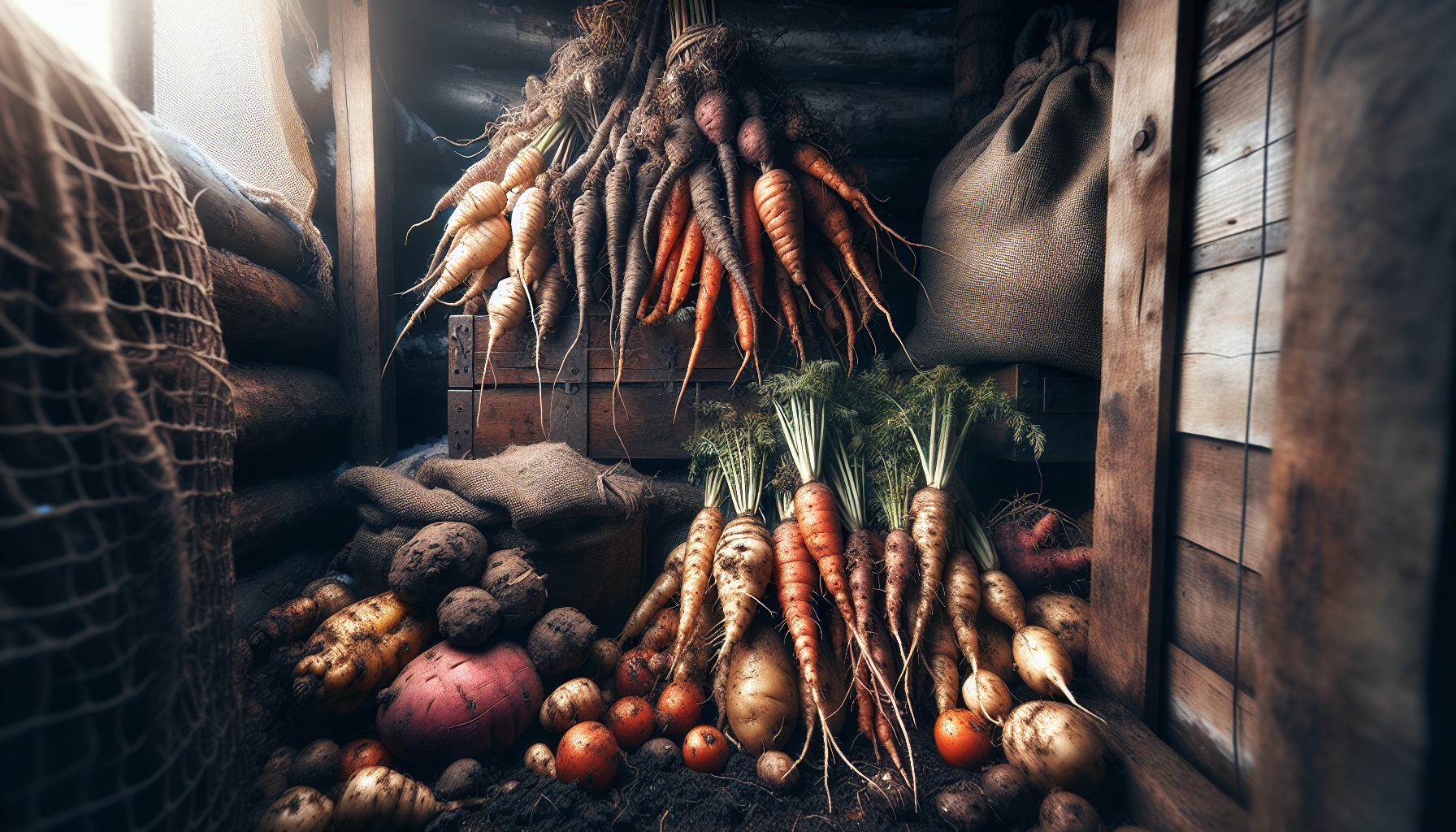
Not all root vegetables are created equal when it comes to storage longevity. For winter food storage, focus on robust varieties that have been tried and tested over generations. Common root vegetables ideal for storage include:
- Potatoes
- Carrots
- Beets
- Turnips
- Rutabagas
These types are known for their durability and capability to retain quality over several months when stored under suitable conditions.
2. Preparing Root Vegetables for Storage
Prior to storage, proper preparation is vital. Begin by gently cleaning each vegetable to remove soil, as dirt can harbor moisture and encourage rot. Trim the leafy tops of vegetables like carrots and beets, leaving a small stub—a few centimeters from the top. However, take care not to cut into the flesh, as this can expose the root to potential decay. Allow the vegetables to air dry thoroughly before proceeding to storage.
3. Optimal Storage Methods for Root Vegetables
Creating the right storage environment is crucial for preserving vegetables. Generally, a cool, dark place is optimal. Consider using a root cellar, which naturally maintains the ideal temperature and humidity levels. Alternatively, an unheated basement or a garage can serve well if you simulate the cellar conditions.
| Vegetable | Optimal Temperature | Humidity Level |
|---|---|---|
| Potatoes | 45-50°F (7-10°C) | 90-95% |
| Carrots & Beets | 32-40°F (0-5°C) | 90-95% |
| Turnips & Rutabagas | 32-40°F (0-5°C) | 90-95% |
Ensure proper ventilation and inspect regularly for any signs of spoilage or pests.
4. Tips for Maintaining Quality During Storage
Regular checks are essential to maintaining quality. Inspect your root vegetables every few weeks to identify any potential issues early. If you notice any rotting vegetables, remove them immediately to prevent the spread of decay. Keep the storage area at consistent temperature and humidity levels to avoid compromising the vegetables.
5. Troubleshooting Common Storage Issues
Even with the best intentions, issues can arise. Common problems include:
- Shriveling: Caused by too low humidity; increase humidity in your storage area.
- Spoiling: Often a result of too much warmth; ensure the storage area remains cool.
- Pests: Use mesh covers and check for infestations regularly.
Conclusion: Embracing Self-Sufficiency in Winter
Storing root vegetables is a tradition grounded in self-sufficiency and mindful preparation. By choosing the right varieties, preparing them meticulously, and storing them under optimal conditions, you can enjoy a rich supply of nutrients throughout winter. Begin mastering these techniques today to ensure your pantry remains robust and reliable.
What root vegetables store best for winter?
Potatoes, carrots, beets, turnips, and rutabagas are the best options due to their resilient nature.
How do I prepare my root vegetables for storage?
Clean and trim any leafy tops, ensuring the vegetables are dry before storing.
What are the best storage conditions for root vegetables?
A cool, dark, and humid environment like a root cellar is ideal for preserving root vegetables.
How long can I store root vegetables?
When stored properly, root vegetables can last anywhere from 2 to 8 months depending on the variety.